Kamis, 22 Agustus 2013

[V577.Ebook] Download PDF Species Diversity in Space and Time, by Michael L. Rosenzweig

Download PDF Species Diversity in Space and Time, by Michael L. Rosenzweig

When getting this book Species Diversity In Space And Time, By Michael L. Rosenzweig as referral to read, you could get not only inspiration yet additionally new expertise as well as driving lessons. It has greater than usual benefits to take. What sort of book that you review it will serve for you? So, why should obtain this e-book qualified Species Diversity In Space And Time, By Michael L. Rosenzweig in this post? As in link download, you could obtain guide Species Diversity In Space And Time, By Michael L. Rosenzweig by on-line.

Species Diversity in Space and Time, by Michael L. Rosenzweig

Species Diversity in Space and Time, by Michael L. Rosenzweig


Species Diversity in Space and Time, by Michael L. Rosenzweig

Download PDF Species Diversity in Space and Time, by Michael L. Rosenzweig

Species Diversity In Space And Time, By Michael L. Rosenzweig When creating can change your life, when writing can enrich you by offering much money, why do not you try it? Are you still really baffled of where understanding? Do you still have no idea with what you are visiting write? Now, you will certainly need reading Species Diversity In Space And Time, By Michael L. Rosenzweig A great writer is a great reader simultaneously. You could define exactly how you compose relying on just what books to read. This Species Diversity In Space And Time, By Michael L. Rosenzweig could help you to fix the problem. It can be one of the ideal sources to create your creating skill.

When going to take the experience or ideas kinds others, book Species Diversity In Space And Time, By Michael L. Rosenzweig can be a great resource. It's true. You can read this Species Diversity In Space And Time, By Michael L. Rosenzweig as the resource that can be downloaded and install here. The means to download and install is also simple. You could see the web link web page that we offer and afterwards purchase guide making a bargain. Download and install Species Diversity In Space And Time, By Michael L. Rosenzweig as well as you can put aside in your own device.

Downloading and install the book Species Diversity In Space And Time, By Michael L. Rosenzweig in this site lists can provide you a lot more advantages. It will show you the best book collections and finished collections. Numerous publications can be discovered in this web site. So, this is not only this Species Diversity In Space And Time, By Michael L. Rosenzweig Nevertheless, this book is described check out considering that it is a motivating publication to make you more possibility to get encounters and also ideas. This is simple, review the soft file of guide Species Diversity In Space And Time, By Michael L. Rosenzweig as well as you get it.

Your perception of this book Species Diversity In Space And Time, By Michael L. Rosenzweig will certainly lead you to get exactly what you exactly require. As one of the impressive publications, this publication will provide the presence of this leaded Species Diversity In Space And Time, By Michael L. Rosenzweig to accumulate. Even it is juts soft file; it can be your collective documents in gizmo as well as other tool. The important is that use this soft documents publication Species Diversity In Space And Time, By Michael L. Rosenzweig to review and take the perks. It is what we mean as book Species Diversity In Space And Time, By Michael L. Rosenzweig will certainly boost your thoughts and mind. After that, checking out book will likewise boost your life quality better by taking excellent activity in balanced.

Species Diversity in Space and Time, by Michael L. Rosenzweig

Species diversity is marked by some interesting facts--such as larger areas have more species, and diversity is particularly high near the equator. Other factors to consider are what reduces diversity in ecologically productive places and across what scales of space and time diversity patterns hold. This book examines these questions and many others, the author employing both theory and data in his search for answers. Surprisingly, many of the questions have reasonably likely answers. By identifying these, attention can be turned toward life's many still-unexplained diversity patterns. As evolutionary ecologists race to understand biodiversity before it is too late, this book will help set the agenda for diversity research into the next century and will be useful to graduate students and researchers in ecology and evolutionary and conservation biology.

  • Sales Rank: #846372 in Books
  • Brand: Brand: Cambridge University Press
  • Published on: 1995-05-26
  • Original language: English
  • Number of items: 1
  • Dimensions: 9.72" h x .94" w x 6.85" l, 1.41 pounds
  • Binding: Paperback
  • 460 pages
Features
  • Used Book in Good Condition

Review
"This is a milestone, or perhaps more of a buoy on a turbulent sea, that defines...one man's position on his life's work." G. Stevens, Choice

"In what may be the most important book on this subject since MacArthur's Geographical Ecology, Rosenzweig combines theory with a huge body of empirical observations on terrestrial, aquatic, and marine organisms living today as well as in the geological past to produce a coherent account that brings together several previously separate research traditions ranging from experimental ecology to ecosystems analysis, paleontology, biogeography, and macroevolution...Rosenzweig confronts the complexity of diversity directly, convincing the reader that a predictive understanding can come about only when we study the phenomenon at all scales of space and time...More clearly than anyone else, Rosenzweig shows why we cannot employ small-scale patterns of diversity uncritically as models to explain larger scale patterns of diversity among biogeographical provinces over geological time." Geerat J. Vermeij, Science

"I recommend the book...It provides one of the clearest and best accounts of species-area relationships I have read, and it shows how scale matters if we are to understand these relationships...It will give us much to think about, and should generate some lively debates." John H. Lawton, Nature

"...a comprehensive synthesis and analysis of a whole range of biological inquiry, centred on patterns of species diversity, richness and abundance...By providing a detailed analysis and suggesting what we know and what we do not, Rosenzweig provides valuable input to a revised research agenda for diversity research." Stephen Woodley, Environments

"Species Diversity in Space and Time is both an indispensable review of work on patterns of species diversity and a template for organizing future work...He has shared his deep thoughts on complex topics, and the book will be of great value to those who pursue this fundamentally important subject." Peter S. White, American Scientist

"In a clear, almost conversational style, the author addresses a broad range of topics...Rosenzweig combines empirical data, simulation model results, and ecological theory to address topics such as the scale dependence of the slopes of species-area curves, the coevolution of habitat diversity with species diversity, and paleobiological patterns...The focus of this book is on ecological theory and it does not directly address management applications, but it should be accessible to a broad readership that includes natural area managers and nonscientists...The rare difficult sections may be skipped without loss of continuity, though, and the reader should be rewarded, as I was, with an enhanced multiscale perspective on species diversity." Don McKenzie, Natural Areas Journal

"...a sweeping and far ranging book...instructful and insightful...[Rosenzweig] is thorough in both his description of the pattern and in his discussion of factors...this book covers a tremendous breadth of material and thus gives a fine starting place to begin to answer the question, why are there this many species here?" M.H.H. Stevens, Plant Science Bulletin

Most helpful customer reviews

4 of 5 people found the following review helpful.
Great explanations of species diversity
By E. Osier
My graduate advisor recommended this book and I'm getting a copy for myself. It is full of useful, clear-cut information about the complexities that create the diversity we see everywhere within the natural world. It is easy to read, almost conversational, with numerous examples from all areas of ecological research. There are many graphs to visually explain the patterns described and not too many difficult, complex formulas (only the necessary ones).

6 of 11 people found the following review helpful.
Seral and evolutionary consideration well interwoven
By Tom L. Forest
Some chapter titles: Patterns in Space; Patterns in Time; Dimensionless patterns (body size, food chain patterns); Speciation; Extinction; Species-Area Curves; Energy Flow and Diversity
I have used this work as a foundation for simulation modeling of biodiversity in seral and evolutionary time frames. It's intended as a textbook, though knowledgeable lay people will find its richness rewarding.

1 of 1 people found the following review helpful.
Best of it's sort
By SONNY S BLEICHER
Best book to get your graduate career in Ecology jump started, heavy book, but very well written. Would definitely give to my students to read .

See all 4 customer reviews...

Species Diversity in Space and Time, by Michael L. Rosenzweig PDF
Species Diversity in Space and Time, by Michael L. Rosenzweig EPub
Species Diversity in Space and Time, by Michael L. Rosenzweig Doc
Species Diversity in Space and Time, by Michael L. Rosenzweig iBooks
Species Diversity in Space and Time, by Michael L. Rosenzweig rtf
Species Diversity in Space and Time, by Michael L. Rosenzweig Mobipocket
Species Diversity in Space and Time, by Michael L. Rosenzweig Kindle

Species Diversity in Space and Time, by Michael L. Rosenzweig PDF

Species Diversity in Space and Time, by Michael L. Rosenzweig PDF

Species Diversity in Space and Time, by Michael L. Rosenzweig PDF

Sabtu, 17 Agustus 2013

[G374.Ebook] Download A Short Introduction to Counselling Psychology (Short Introductions to the Thera, by Dr Vanja Orlans~Ms Susan Van Scoyoc

Download A Short Introduction to Counselling Psychology (Short Introductions to the Thera, by Dr Vanja Orlans~Ms Susan Van Scoyoc

The reason of why you could get and get this A Short Introduction To Counselling Psychology (Short Introductions To The Thera, By Dr Vanja Orlans~Ms Susan Van Scoyoc faster is that this is guide in soft data type. You can review the books A Short Introduction To Counselling Psychology (Short Introductions To The Thera, By Dr Vanja Orlans~Ms Susan Van Scoyoc anywhere you want even you remain in the bus, office, house, and other places. But, you could not need to relocate or bring the book A Short Introduction To Counselling Psychology (Short Introductions To The Thera, By Dr Vanja Orlans~Ms Susan Van Scoyoc print wherever you go. So, you will not have larger bag to bring. This is why your selection making much better concept of reading A Short Introduction To Counselling Psychology (Short Introductions To The Thera, By Dr Vanja Orlans~Ms Susan Van Scoyoc is truly useful from this situation.

A Short Introduction to Counselling Psychology (Short Introductions to the Thera, by Dr Vanja Orlans~Ms Susan Van Scoyoc

A Short Introduction to Counselling Psychology (Short Introductions to the Thera, by Dr Vanja Orlans~Ms Susan Van Scoyoc


A Short Introduction to Counselling Psychology (Short Introductions to the Thera, by Dr Vanja Orlans~Ms Susan Van Scoyoc

Download A Short Introduction to Counselling Psychology (Short Introductions to the Thera, by Dr Vanja Orlans~Ms Susan Van Scoyoc

A Short Introduction To Counselling Psychology (Short Introductions To The Thera, By Dr Vanja Orlans~Ms Susan Van Scoyoc. Allow's read! We will often discover out this sentence almost everywhere. When still being a youngster, mama made use of to purchase us to always review, so did the teacher. Some publications A Short Introduction To Counselling Psychology (Short Introductions To The Thera, By Dr Vanja Orlans~Ms Susan Van Scoyoc are totally reviewed in a week and also we need the commitment to support reading A Short Introduction To Counselling Psychology (Short Introductions To The Thera, By Dr Vanja Orlans~Ms Susan Van Scoyoc Exactly what around now? Do you still enjoy reading? Is reviewing just for you that have commitment? Never! We right here supply you a brand-new publication qualified A Short Introduction To Counselling Psychology (Short Introductions To The Thera, By Dr Vanja Orlans~Ms Susan Van Scoyoc to check out.

As recognized, book A Short Introduction To Counselling Psychology (Short Introductions To The Thera, By Dr Vanja Orlans~Ms Susan Van Scoyoc is well known as the window to open the globe, the life, and also brand-new point. This is what individuals now require a lot. Also there are many people who don't such as reading; it can be an option as recommendation. When you truly need the methods to produce the next motivations, book A Short Introduction To Counselling Psychology (Short Introductions To The Thera, By Dr Vanja Orlans~Ms Susan Van Scoyoc will actually lead you to the way. Furthermore this A Short Introduction To Counselling Psychology (Short Introductions To The Thera, By Dr Vanja Orlans~Ms Susan Van Scoyoc, you will certainly have no regret to obtain it.

To get this book A Short Introduction To Counselling Psychology (Short Introductions To The Thera, By Dr Vanja Orlans~Ms Susan Van Scoyoc, you might not be so confused. This is online book A Short Introduction To Counselling Psychology (Short Introductions To The Thera, By Dr Vanja Orlans~Ms Susan Van Scoyoc that can be taken its soft file. It is various with the on-line book A Short Introduction To Counselling Psychology (Short Introductions To The Thera, By Dr Vanja Orlans~Ms Susan Van Scoyoc where you could buy a book then the seller will certainly send out the printed book for you. This is the location where you could get this A Short Introduction To Counselling Psychology (Short Introductions To The Thera, By Dr Vanja Orlans~Ms Susan Van Scoyoc by online and also after having manage purchasing, you could download and install A Short Introduction To Counselling Psychology (Short Introductions To The Thera, By Dr Vanja Orlans~Ms Susan Van Scoyoc alone.

So, when you need quick that book A Short Introduction To Counselling Psychology (Short Introductions To The Thera, By Dr Vanja Orlans~Ms Susan Van Scoyoc, it does not should get ready for some days to get the book A Short Introduction To Counselling Psychology (Short Introductions To The Thera, By Dr Vanja Orlans~Ms Susan Van Scoyoc You can straight obtain guide to conserve in your tool. Even you love reading this A Short Introduction To Counselling Psychology (Short Introductions To The Thera, By Dr Vanja Orlans~Ms Susan Van Scoyoc anywhere you have time, you could enjoy it to read A Short Introduction To Counselling Psychology (Short Introductions To The Thera, By Dr Vanja Orlans~Ms Susan Van Scoyoc It is definitely valuable for you who wish to get the more valuable time for reading. Why don't you invest 5 minutes and invest little cash to obtain the book A Short Introduction To Counselling Psychology (Short Introductions To The Thera, By Dr Vanja Orlans~Ms Susan Van Scoyoc right here? Never ever allow the extra point quits you.

A Short Introduction to Counselling Psychology (Short Introductions to the Thera, by Dr Vanja Orlans~Ms Susan Van Scoyoc

  • Published on: 2009-01-01
  • Binding: Paperback

Most helpful customer reviews

See all customer reviews...

A Short Introduction to Counselling Psychology (Short Introductions to the Thera, by Dr Vanja Orlans~Ms Susan Van Scoyoc PDF
A Short Introduction to Counselling Psychology (Short Introductions to the Thera, by Dr Vanja Orlans~Ms Susan Van Scoyoc EPub
A Short Introduction to Counselling Psychology (Short Introductions to the Thera, by Dr Vanja Orlans~Ms Susan Van Scoyoc Doc
A Short Introduction to Counselling Psychology (Short Introductions to the Thera, by Dr Vanja Orlans~Ms Susan Van Scoyoc iBooks
A Short Introduction to Counselling Psychology (Short Introductions to the Thera, by Dr Vanja Orlans~Ms Susan Van Scoyoc rtf
A Short Introduction to Counselling Psychology (Short Introductions to the Thera, by Dr Vanja Orlans~Ms Susan Van Scoyoc Mobipocket
A Short Introduction to Counselling Psychology (Short Introductions to the Thera, by Dr Vanja Orlans~Ms Susan Van Scoyoc Kindle

A Short Introduction to Counselling Psychology (Short Introductions to the Thera, by Dr Vanja Orlans~Ms Susan Van Scoyoc PDF

A Short Introduction to Counselling Psychology (Short Introductions to the Thera, by Dr Vanja Orlans~Ms Susan Van Scoyoc PDF

A Short Introduction to Counselling Psychology (Short Introductions to the Thera, by Dr Vanja Orlans~Ms Susan Van Scoyoc PDF

Jumat, 16 Agustus 2013

[U319.Ebook] Get Free Ebook Once in a Great City: A Detroit Story, by David Maraniss

Get Free Ebook Once in a Great City: A Detroit Story, by David Maraniss

Once In A Great City: A Detroit Story, By David Maraniss. A task could obligate you to always enrich the knowledge as well as encounter. When you have no sufficient time to enhance it directly, you could obtain the experience and also knowledge from reviewing the book. As everyone recognizes, book Once In A Great City: A Detroit Story, By David Maraniss is preferred as the window to open the world. It suggests that reading publication Once In A Great City: A Detroit Story, By David Maraniss will certainly offer you a brand-new method to find every little thing that you need. As guide that we will certainly offer here, Once In A Great City: A Detroit Story, By David Maraniss
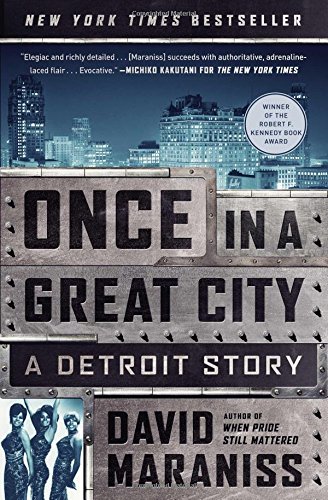
Once in a Great City: A Detroit Story, by David Maraniss

Once in a Great City: A Detroit Story, by David Maraniss


Once in a Great City: A Detroit Story, by David Maraniss

Get Free Ebook Once in a Great City: A Detroit Story, by David Maraniss

Learn the technique of doing something from lots of sources. One of them is this publication qualify Once In A Great City: A Detroit Story, By David Maraniss It is an extremely well known publication Once In A Great City: A Detroit Story, By David Maraniss that can be referral to review now. This suggested publication is among the all fantastic Once In A Great City: A Detroit Story, By David Maraniss collections that remain in this website. You will additionally find various other title and also motifs from different writers to browse below.

Reviewing Once In A Great City: A Detroit Story, By David Maraniss is a very helpful interest and doing that can be undertaken any time. It implies that checking out a book will not restrict your task, will not compel the moment to spend over, and also will not invest much money. It is an extremely budget-friendly as well as obtainable thing to acquire Once In A Great City: A Detroit Story, By David Maraniss However, keeping that very cheap thing, you can obtain something brand-new, Once In A Great City: A Detroit Story, By David Maraniss something that you never do as well as get in your life.

A brand-new encounter could be obtained by reviewing a book Once In A Great City: A Detroit Story, By David Maraniss Even that is this Once In A Great City: A Detroit Story, By David Maraniss or other publication compilations. Our company offer this book considering that you could find much more points to encourage your skill and understanding that will certainly make you much better in your life. It will certainly be likewise helpful for the people around you. We suggest this soft file of the book right here. To understand ways to obtain this book Once In A Great City: A Detroit Story, By David Maraniss, learn more below.

You can discover the link that we provide in website to download and install Once In A Great City: A Detroit Story, By David Maraniss By buying the cost effective rate as well as get finished downloading, you have actually completed to the initial stage to obtain this Once In A Great City: A Detroit Story, By David Maraniss It will be nothing when having bought this book and do nothing. Review it as well as expose it! Invest your couple of time to simply check out some sheets of page of this publication Once In A Great City: A Detroit Story, By David Maraniss to check out. It is soft data and also easy to read wherever you are. Appreciate your brand-new practice.

Once in a Great City: A Detroit Story, by David Maraniss

“A fascinating political, racial, economic, and cultural tapestry” (Detroit Free Press), a tour de force from David Maraniss about the quintessential American city at the top of its game: Detroit in 1963.

Detroit in 1963 is on top of the world. The city’s leaders are among the most visionary in America: Grandson of the first Ford; Henry Ford II; Motown’s founder Berry Gordy; the Reverend C.L. Franklin and his daughter, the incredible Aretha; Governor George Romney, Mormon and Civil Rights advocate; car salesman Lee Iacocca; Police Commissioner George Edwards; Martin Luther King. The time was full of promise. The auto industry was selling more cars than ever before. Yet the shadows of collapse were evident even then.

“Elegiac and richly detailed” (The New York Times), in Once in a Great City David Maraniss shows that before the devastating riot, before the decades of civic corruption and neglect, and white flight; before people trotted out the grab bag of rust belt infirmities and competition from abroad to explain Detroit’s collapse, one could see the signs of a city’s ruin. Detroit at its peak was threatened by its own design. It was being abandoned by the new world economy and by the transfer of American prosperity to the information and service industries. In 1963, as Maraniss captures it with power and affection, Detroit summed up America’s path to prosperity and jazz that was already past history. “Maraniss has written a book about the fall of Detroit, and done it, ingeniously, by writing about Detroit at its height….An encyclopedic account of Detroit in the early sixties, a kind of hymn to what really was a great city” (The New Yorker).

  • Sales Rank: #17462 in Books
  • Brand: Simon Schuster
  • Published on: 2016-09-20
  • Released on: 2016-09-20
  • Original language: English
  • Number of items: 1
  • Dimensions: 8.37" h x 1.30" w x 5.50" l, .0 pounds
  • Binding: Paperback
  • 464 pages
Features
  • Simon Schuster

Review
* A Best Book of 2015 (The Economist) *

* Winner - Robert F. Kennedy Book Award *

“Elegiac and richly detailed . . . Maraniss . . . conjures those boom years of his former hometown with novelistic ardor. Using overlapping portraits of Detroiters (from politicians to musicians to auto execs), he creates a mosaiclike picture of the city that has the sort of intimacy and tactile emotion that Larry McMurtry brought to his depictions of the Old West, and the gritty sweep of David Simon’s HBO series “The Wire.” . . . People’s experiences intersect or collide or resonate with one another, and Mr. Maraniss uses them as windows on the larger cultural and political changes convulsing the nation in the ‘60s . . . [Maraniss] succeeds with authoritative, adrenaline-laced flair. . . . Maraniss cuts among story lines about the auto industry, the civil rights movement and City Hall, and among subplots involving Ford’s development of its top-secret new car (the singular Mustang), the police commissioner’s efforts to get the goods on the mobster Tony Giacalone and Berry Gordy’s construction of a hit factory with Motown. The result is a buoyant Frederick Lewis Allen-like social history that’s animated by an infectious soundtrack and lots of tactile details, and injected with a keen understanding of larger historical forces at work – both in Detroit and America at large. . . . Maraniss’s evocative book provides a wistful look back at an era when those cracks were only just beginning to show, and the city still seemed a place of “uncommon possibility” and was creating “wondrous and lasting things.” (Michiko Kakutani for The New York Times)

“Captivating . . . Maraniss hears the joyous sound of a city suddenly, improbably filled with hope. . . . Maraniss asks himself what in the city has lasted, a question that often haunts former Detroiters. The songs, he decides. Not the reforms, not the dream of racial justice, not the promise of a Great Society, but the wonderfully exuberant songs that came pouring out of Berry Gordy’s studio. That’s the tragedy at the core of this gracious, generous book. All that remains of the hopeful moment Maraniss so effectively describes is a soundtrack. And that isn’t nearly enough.” (The Washington Post)

“Once in a Great City is incandescent. Through evocative writing and prodigious research, David Maraniss offers us an unforgettable portrait of 1963 Detroit, muscular and musical, during the early days of Motown and the Mustang. Bursting with larger than life figures from Henry Ford II, Walter Reuther, and Mayor Jerome Cavanagh, to Berry Gordy, Martin Luther King, and Reverend C.L. Franklin, Aretha's father, this book is at once the chronicle of a city during its last fine time and also a classic American story of promise and loss.” (Gay Talese)

“The great virtue of Maraniss’s bighearted book is that it casts a wide net, collecting and seeking to synthesize these seemingly disparate strands. . . . Even where material is familiar, the connections Maraniss makes among these figures feel fresh. He’s even better on the lesser known. . . . Motown is clearly where Maraniss’s heart is, and it is where his materials—music, race, civil rights—come together most naturally. . . . You finish Once in a Great City feeling mildly shattered, which is exactly as it should be.” (New York Times Book Review)

“Maraniss has written a book about the fall of Detroit, and done it, ingeniously, by writing about Detroit at its height, Humpty Dumpty’s most poignant moment being just before he toppled over. . . . An encyclopedic account of Detroit in the early sixties, a kind of hymn to what really was a great city. . . . The display of municipal energies is so impressive that every page haunts us with the questions What went wrong? How could so much go so wrong so rapidly? How did a city of so many fruitful tensions and monuments and intermediary institutions turn into the ruins we see now, with scarcely a third of its 1950 population remaining and so many of the sites that Maraniss mentions ruined or destroyed?” (The New Yorker)

“David Maraniss is a journalist's journalist. . . . the book explores the optimism that existed in those days and the signs of major problems to come. It's a fascinating political, racial, economic and cultural tapestry.” (Detroit Free Press)

“David Maraniss turns back the clock to paint the picture of an American metropolis in its prime, however, one where the seeds of the city’s future fall were already starting to take root. . . . Maraniss’s recounting of the story of his birthplace has the distinct feeling of the first big drop of a roller coaster. A car chugging upward towards heady heights, but en route takes an inevitable plunge back into cold reality. . . . Maraniss is able to give these characters life by injecting them with foibles along with the force of personality that made them prominent figures in the building of the city. . . . The simple breadth of the book is impressive, with Maraniss merging and wrangling disparate storylines about culture, politics, race, and the Ford Mustang into a single patchwork image of the Motor City.” (Christian Science Monitor)

“A compelling portrait of one of America’s most iconic cities. . . . Maraniss highlights the class and race frictions that demarcated and defined the city and gives readers a glimpse of the colorful life of mobsters and moguls, entertainers and entrepreneurs. Among the famous Detroiters he highlights are Henry Ford II, Lee Iacocca, Berry Gordy Jr., George Romney, and the Reverend C. L. Franklin. Maraniss captures Detroit just as it is both thriving and dying, at the peak of its vibrancy and on the verge of its downfall.” (Booklist (starred review))

“A sprawling portrait of Detroit at a pivotal moment.” (Publishers Weekly)

“In celebration of what Detroit represented, this book is equally a study of what was lost and is written with an attractive wistfulness that pulls the reader in. The narrative's tone of reminiscence makes it entertainingly informative. . . A colorful, detailed history of the rise and ultimate decline of Detroit.” (Library Journal)

“Fast-paced,sprawling, copiously detailed look at 18 months—from 1962 to 1964—in the city's past . . . Maraniss' brawny narrative evokes a city still ‘vibrantly alive’ and striving for a renaissance. An illuminating history of a golden era in a city desperately seeking to reclaim the glory.” (Kirkus Reviews)

“[A] glimmering portrait of Detroit . . . that will leave the reader thoroughly haunted. . . . Once in a Great City has it all: significant scenes, tremendously charismatic figures, even a starry soundtrack. . . . Reading about the city in its hey day is like falling backward in time and running into someone whose youthful blush you’d completely forgotten. Detroit is that someone. She is bright and laughing, flickering before you like a specter from the past. I doubt I’ll forget her anytime soon.” (Bookpage)

"Maraniss . . . undoubtedly will attract notice and focus even more attention on Detroit. . . . a unique and absorbing take. . . . As often as authors have told the story of Gordy and the rise of Motown, Maraniss still captures the vitality and enterprise on West Grand Boulevard in a fresh way. . . . [Maraniss] is equally adept at capturing the white-run city’s complex racial dynamics at a time when black leaders were becoming more militant and clashing with each other over the proper level of assertiveness. Maraniss . . . is a skillful storyteller, and his interpretation of events in Detroit a half century ago is well founded. . . . Maraniss will only add to his reputation with Once in a Great City. It’s a good read if your interest is only to visit Detroit’s remarkable recent past. It’s even a better read if you are interested in the city’s extraordinary devolution. In either case, it’s a story that is haunting, thought-provoking and, in the end, sad." (DeadlineDETROIT.com)

“A sobering portrait of a city that felt itself to be at the peak of its power and influence in a "time of uncommon possibility and freedom when Detroit created wondrous and lasting things," even as the forces that would topple it had set about their work. The principal strength of Maraniss's book lies in his skill at marshaling copious research to serve his sophisticated account of a complex, vibrant city balanced on its tipping point. . . . Sadly, one can't avoid the conclusion that never again will it be the city David Maraniss portrays with empathy and candor in this impressive book.” (Shelf Awareness)

“Maraniss . . . aptly traces these two narratives — cars and race — in chronicling a pivotal period of his hometown’s history. Spanning autumn 1962 to spring 1964, the book bustles with vivid characters, from Berry Gordy and C.L. Franklin (Aretha’s father), to Walter Reuther and George Romney (Mitt’s father). “It all looked so promising,” Maraniss writes, paraphrasing Detroit Mayor Jerome Cavanagh’s conversation with President Johnson after his 1964 visit, but even in those halcyon days, “some part of Detroit was dying,” a casualty of white flight, the demise of labor unions, and a changing world. This is a beautifully written tribute to that lost, great city.” (The Boston Globe)

“Combining hindsight and insight with deep-dive research, Maraniss provides a clear-eyed flashback to a once-powerful manufacturing metropolis intoxicated by cheap gasoline, swaggering hubris and blue-sky confidence. . . . Maraniss examines modern history in the dogged manner of David Halberstam and Robert Caro. Between the lines, he leaves an unwritten thought for both today’s optimists and pessimists. If things could go change so much in just 50 years, what might the next half-century bring?” (The Detroit News)

“One of America’s finest non-fiction writers, a son of Detroit, offers a lively and meticulously researched account of how the city, once the engine room of America, began sputtering.” (The Economist)

“Maraniss’ well-written and researched book well remembers the city of Detroit in the early 1960s as a place where factories hummed, Motown rocked and the present gave little warning that Detroit would become a ‘city of decay.’” (Seattle Times)

About the Author
Born in Detroit, David Maraniss is an associate editor at The Washington Post. Maraniss is a Pulitzer Prize–winning journalist and bestselling author of Once in a Great City: A Detroit Story; First in His Class: A Biography of Bill Clinton; Rome 1960: The Olympics that Stirred the World; Barack Obama: The Story; Clemente: The Passion and Grace of Baseball’s Last Hero; They Marched into Sunlight: War and Peace, Vietnam and America, October 1967; and When Pride Still Mattered: A Life of Vince Lombardi, which was hailed by Sports Illustrated as “maybe the best sports biography ever published.” He lives in Washington, DC, and Madison, Wisconsin.

Excerpt. © Reprinted by permission. All rights reserved.
Once in a Great City Chapter 1 GONE


THE NINTH OF NOVEMBER 1962 was unseasonably pleasant in the Detroit area. It was an accommodating day for holiday activity at the Ford Rotunda, where a company of workmen were installing exhibits for the Christmas Fantasy scheduled to open just after Thanksgiving. Not far from a main lobby display of glistening next-model Ford Thunderbirds and Galaxies and Fairlanes and one-of-a-kind custom dream cars, craftsmen were constructing a life-size Nativity scene and a Santa’s North Pole workshop surrounded by looping tracks of miniature trains and bountiful bundles of toys. This quintessentially American harmonic convergence of religiosity and consumerism was expected to attract more than three-quarters of a million visitors before the season was out, and for a generation of children it would provide a lifetime memory—walking past the live reindeer Donner and Blitzen, up the long incline toward a merry band of hardworking elves, and finally reaching Santa Claus and his commodious lap.

The Ford Rotunda was circular in an automotive manufacturing kind of way. It was shaped like an enormous set of grooved transmission gears, one fitting neatly inside the next, rising first 80 then 90 then 100 then 110 feet, to the equivalent of ten stories. Virtually windowless, with its steel frame and exterior sheath of Indiana limestone, this unusual structure was the creation of Albert Kahn, the prolific architect of Detroit’s industrial age. Kahn had designed it for the Century of Progress exposition in Chicago, where Ford’s 1934 exhibit hall chronicled the history of transportation from the horse-drawn carriage to the latest Ford V-8. When that Depression-era fair shuttered, workers dismantled the Rotunda and moved it from the south side shore of Lake Michigan to Dearborn, on the southwest rim of Detroit, where it was reconstructed to serve as a showroom and visitors center across from what was then Ford Motor Company’s world headquarters. Later two wings were added, one to hold Ford’s archives and the other for a theater.

In the fullness of the postwar fifties, with the rise of suburbs and two-car garages and urban freeways and the long-distance federal interstate system, millions of Americans paid homage to Detroit’s grand motor palace. For a time, the top five tourist attractions in the United States were Niagara Falls, the Great Smokey Mountains National Park, the Smithsonian Institution, the Lincoln Memorial, and the Ford Rotunda. The Rotunda drew more visitors than Yellowstone, Mount Vernon, the Statue of Liberty, or the Washington Monument. Or so the Ford publicists claimed. Chances are you have not heard of it.

To appreciate what the Rotunda and its environs signified then to Detroiters, a guide would be useful, and for this occasion Robert C. Ankony fills the role. Ankony (who went on to become an army paratrooper and narcotics squad officer, eventually earning a PhD in sociology from Wayne State University) was fourteen in November 1962, a chronic juvenile delinquent who specialized in torching garages. Desperate to avoid drudgery and boredom, he knew the Rotunda the way a disaffected boy might know it. Along with the Penobscot Building, the tallest skyscraper downtown, the Rotunda was among his favorite places to hang out when he played hooky, something he did as often as possible, including on that late fall Friday morning.

“The Highway” is what Ankony and his friends called the area where they lived in the southwest corner of Detroit. The highway was West Vernor, a thoroughfare that ran east through the neighborhood toward Michigan Central Station, the grand old beaux arts train depot, and west into adjacent Dearborn toward Ford’s massive River Rouge Complex, another Albert Kahn creation and the epicenter of Ford’s manufacturing might. In Detroit Industry, the legendary twenty-seven-panel murals at the Detroit Institute of Arts painted by Diego Rivera and commissioned by Edsel Ford, the founder’s son, among the few distinguishable portraits within the scenes of muscular Ford machines and workers is that of Kahn, wearing wire-rim glasses and work overalls. Ankony experienced Detroit industry with all of his senses: the smoke and dust and smells drifted downwind in the direction of his family’s house two miles away on Woodmere at the edge of Patton Park. His mother, Ruth, who could see the smokestacks from her rear window, hosed the factory soot off her front porch every day. What others considered a noxious odor the Ankonys and their neighbors would describe as the smell of home.

On the morning of November 9, young Bob reported to Wilson Junior High, found another boy who was his frequent collaborator in truancy, and hatched plans for the day. After homeroom, they pushed through the double doors with the horizontal brass panic bars, ran across the school grounds and over a two-foot metal fence, scooted down the back alley, and were free, making their way to West Vernor and out toward Ford country.

It was a survival course on the streets, enlivened by the thrill of avoiding the cops. Slater’s bakery for day-old doughnuts, claw-shaped with date fillings, three cents apiece. Scrounging curbs and garbage cans for empty soda bottles and turning them in for two cents each. If they had enough pennies, maybe go for a dog at the Coney Island on Vernor. Rounding the curve where Vernor turned to Dix, past the Dearborn Mosque and the Arab storefronts of east Dearborn. (Ankony’s parents were Lebanese and French; he grew up being called a camel jockey and “little A-rab.”) Fooling around at the massive slag piles near Eagle Pass. Dipping down into the tunnel leading toward the Rouge, leaning over a walkway railing and urinating on cars passing below, then up past the factory bars, Salamie’s and Johnny’s, and filching lunches in white cardboard boxes from the ledge of a sandwich shop catering to autoworkers on shift change. Skirting the historic overpass at Miller Road near Rouge’s Gate 4, where on an afternoon in late May 1937 Walter Reuther and his fellow union organizers were beaten by Ford security goons, a violent encounter that Ankony’s father, who grew up only blocks away, told his family he had witnessed. Gazing in awe at the Rouge plant’s fearsomely majestic industrial landscape from the bridge at Rotunda Road, then on to the Rotunda itself, where workmen were everywhere, not only inside installing the Christmas displays but also outside repairing the roof.

To Ankony, the Rotunda was a wonderland. No worries about truant officers; every day brought school groups, so few would take notice of two stray boys. With other visitors, including on that day a school group from South Bend, they took in the new car displays and a movie about Henry Ford, then blended in with the crowd for a factory tour that left by bus from the side of the Rotunda over to the Rouge plant, then the largest industrial complex in the United States. Ankony had toured the Rouge often, yet the flow of molten metal, the intricacies of the engine plant, the mechanized perfection of the assembly, all the different-colored car parts coming down the line and matching up, the wonder of raw material going in and a finished product coming out, the reality of scenes depicted in Rivera’s murals, thrilled him anew every time. The Rouge itself energized him even as Rivera’s famed murals frightened him. The art, more than the place itself, reminded him of the gray, mechanized life of a factory worker “in those dark dungeons” that seemed expected of a working-class Detroit boy and that he so much yearned to avoid.

When the Rouge tour ended in early afternoon, Ankony and his pal had had enough of Ford for the day and left for a shoplifting spree at the nearby Montgomery Ward store at the corner of Schaefer Road and Michigan Avenue, across the street from Dearborn’s city hall. They were in the basement sporting goods department, checking out ammo and firearms, when they heard a siren outside, then another, a cacophony of wailing fire trucks and screeching police cars. The boys scrambled up and out and saw smoke billowing in the distance. Fire!—and they didn’t start it. Fire in the direction of the Rotunda. They raced toward it.

Roof repairmen since midmorning had been taking advantage of the fifty-degree weather to waterproof the Rotunda’s geodesic dome panels. Using propane heaters, they had been warming a transparent sealant so that it would spray more easily. At around 1 p.m., a heater ignited sealant vapors, sparking a small fire, and though workmen tried to douse the flames with extinguishers they could not keep pace and the fire spread. The South Bend school group had just left the building. Another tour for thirty-five visitors was soon to begin. There was a skeleton staff of eighteen office workers inside; many Rotunda employees were at lunch. A parking lot guard noticed the flames and radioed inside. Alarm bells were sounded, the building was evacuated, the roof repairmen crab-walked to a hatch and scrambled down an inside stairwell, and the Dearborn and Ford fire departments were summoned, their sirens piercing the autumn air, alerting, among others, two truant boys in the Monkey Ward’s basement.

By the time firefighters reached the Rotunda, the entire roof, made of highly combustible plastic and fiberglass, was ablaze. Two aerial trucks circled around to the rear driveway. From the other side, firefighters and volunteers stretched hoses from Schaefer Road and moved forward cautiously. It was too hot, and the water pressure too limited, to douse the fire with sprays up and over the 110 feet to the roof. The structure’s steel frame began to buckle. At 1:56, fire captains ordered their men away from the building, just in time. Robert Dawson, who worked in the Lincoln-Mercury building across the street, looked over and saw a “ball of fire” on the roof but at first no flames below. “Suddenly the roof crashed through. Everything inside turned to flame. Smoke began sifting through the limestone walls. Then, starting at the north corner, the walls crumbled. It was as though you had stacked dominoes and pushed them over.” The fire had reached the Christmas displays, fresh and potent kindling, and raged out of control, bright flames now shooting fifty feet into the sky. The entire building collapsed in a shuddering roar, a whirlwind of hurtling limestone and concrete and dust.

Most helpful customer reviews

31 of 32 people found the following review helpful.
What every American can learn from Detroit
By Joseph J. Serwach
The great Pulitzer Prize-winning David Maraniss does what no other author can: puts the Detroit story into a global perspective that is educational, informative and fun to any reader anywhere. I studied history in my undergraduate years (and helped expand the Pure Michigan and Michigan brands in recent years) and have subsequently read most of the major histories of Detroit and Michigan. Most fall into two categories: 1. A Michigan-centric author full of details of local interest but lacking a big picture perspective beyond the Great Lakes State. 2. A national writer looking for a bigger story who doesn't quite "get" the culture, the topic or the details. The Michigan born Maraniss bridges that divide, speaking our language and telling a story that will play in Peoria or Pleasant Ridge, in LA or in downtown Detroit. He masterfully finds the 18-month period when Detroit had its greatest impact on the United States as a whole (fall 1962 to spring 1964). His book is a must-read page turner that will delight Michiganders as well as audiences far beyond Michigan. The characters include famous names like Henry Ford, Berry Gordy, JFK, LBJ, Walter Reuther, Motown, the first Mustang and Martin Luther King but the real star of the book is Detroit itself. Too often, national reporters consider the land between East and West coasts to be "flyover country" believing the truly important things occur on the coasts. David Maraniss shows better than anyone how Detroit shaped the world and what the world can learn from the mid-1960s pride that prefaced the fall of the last half century. In the process, he shows you Detroit's soul. Marannis, the Washington Post reporter who penned the best ever biography on Bill Clinton, explained better than anyone what made Clinton tick. Now this Detroit native who spent his career on a national stage shows what makes Detroit tick and why Detroit matters to the rest of the world.

106 of 114 people found the following review helpful.
Maraniss has found the gems in Detroit's storied early 60's and tells them in a wonderful, absorbing and awakening fashion.
By MJC
"Detroit". No American city, or perhaps even an international city to some lesser extent, invokes, excites or incites an opinion as much as Detroit, Michigan. It was a city that was truly deserving to be called "Great" as David Maraniss explains in his fabulous account of Detroit during perhaps its headiest years. I think I should know; I am the eldest son of Jerome P. Cavanagh, the Mayor of Detroit from 1962-1970 whose first two years coincided with Mr. Maraniss's time period. I lived at the epicenter of this beautiful city, met and even to some extent, knew all of the major characters Mr. Maraniss writes about, President Kennedy, President Johnson, Walter Reuther, Barry Gordy, The Supremes, Commissioner George Edwards, Michigan Governors John B. Swainson and his successor, Governor George Romney (Mitt's father), most of the minor characters and even just the "characters". I spent much time at my father's office, became friends with all of his important staffers, attended many functions, celebrations, parades, gatherings, openings (they were almost ALL openings) and traveled with my father around the country to Mayoral conventions and other gatherings of like-minded and elected officials, their families and those involved in their cities. I heard it all and saw it all right at the source. My father never hesitated in making his older children a witness to and a part of these gatherings and these events; he thought them a good experience for us, and they were. The absolute best! We lived for those times and the people who made them happen in Detroit. I was with my father at the Rotunda a week before it burned. I was in the lobby of the Sheraton Cadillac Hotel in Detroit in October 1962, where following a meeting my father had with President Kennedy upstairs in the Presidential suite, the President and my father came downstairs. My father noticed me there in the lobby and had the President come over meet me and shake my hand. Heady times! Dad had only been Mayor of Detroit for 10 months and already he'd become close to President Kennedy. I watched Dad help orchestrate Detroit's pitch to win its selection by President Kennedy through the US Olympic Committee to represent the United States as its host city for the 1968 Olympics.There was magic in the air. In short, while everyone has their opinions, I was a living witness to Detroit's greatness so ably captured in Mr. Maraniss's book. I was old enough to know and understand, but most of all FEEL the greatness of Detroit. Everyone I knew felt the same way. We could feel it changing for the better almost every day.

And yes, I saw it change almost overnight during the 1967 riots (and yes, they were riots). I watched my father's heart break at the crushing blow to the city he deeply loved and cared about. In a few days time, those disturbances seemingly wiped out all the progress and the immensely successful and renowned work he and many others did to make Detroit a "Model City".

And yet as Mr. Maraniss says so insightfully, all of the writing was on the wall. Detroit's trend downwards was ever so subtle yet it had begun 10 years before the time period he chose to write about. While it was not evident to anyone but the scholar at the time, some of the bricks in the Detroit's foundation were beginning to come out. After all, why was the city selected as a "Model City", the subject of a President's grand vision for revitalized urban life and the recipient of hundreds of millions of dollars in federal funds to accomplish that unless there is/was some inherent decay already in existence. Money certainly wasn't what the sick patient needed.

To me, it is obvious that Mr. Maraniss wrote about a city that had meant something to him in one way as a native son and as another as an expatriate and adult, able to have stepped aside and seen the larger picture. And yet, while his book can be viewed as a harbinger or lesson for others to live by, it can also be viewed as a city that has not and will not die. I think of his portrayal of Detroit during this time as similar to Florence during the Renaissance when from all corners appear the most diverse and singular men and women, injecting their lives into and placing their stamp upon a local place, its results being long-lasting and with far-reaching effects. We are still seeing those effects in many, many examples today. And GREAT cities don't just go away. And it is unfair to say that Detroit was this or was that, as if the past is the only definition of a living thing. Everything changes. We are here to learn from the past. No, Detroit is not what it was when I was the son of the Mayor but it is still alive and getting better all the time with the same solid commitment and determination from its citizens as it has had at any other time. The methodology might be different but the purpose is still the same. Its greatness is what keeps people's hands in the mix; the effort to preserve what can be preserved, restore what can be restored and build what can be built. Do I miss the old Detroit of David Maraniss's book? Of course. And even more so after reading his exquisitely researched, exhaustive character studies and incredibly loving and entertaining book that captures two of the most ground-shaking years of 20th century Detroit.
Ideally, an author writes about what he or she loves. Once completed, the books or poems become their children. Personally, I felt much his personal involvement and even love behind Mr. Maraniss's story. This gives the book part of its vitality. His zeal for his subject is evident and his unmatchable skills as a writer and story teller have helped propel Detroit back into the chatter. No bad can come of this. Cities once "GREAT" never die. Yes, they get a lot of symbolic dirt thrown over their prematurely buried caskets and people want to hang the crepe LONG before the ceremony has begun. But as Detroit did not see its transition from GREAT to deeply troubled occur in weeks, months or a few years, so it will not see its current rebirth occur in one fell swoop. Change is only noticeable to those who have a perch on a high vantage point and years to have passed by from which to assess. Ah yes, then, the less scholarly Monday Morning Quarterbacking begins by people who in most cases were not even involved, present or even alive. The image of Detroit excites this behavior like no other city in the United States does. But as long as the chatter is going, the City is alive. Having been provided with an urban blueprint such as David Maraniss gives us, we should take all the good in it and through away the bad. To use a metaphor, Maraniss's outstanding research and writing has provided us with the cliff notes. He's done the heavy lifting for us. Florence is great, yet its impact ended over 400 years ago. Rome is still great, although it fell in the 500's. Athens is another example. There are many more. Like those "dead" cities, they are still great. And whether one can compare any or all of this fact to Detroit, Mr. Maraniss's powerful rendering of its amazing history in these monumental years between 1962-1964, make me feel that no other city has a past more enviable than Detroit's. It is Detroit's GREAT past that serves as a major component of its present success. As in years gone by Detroit the former "Model City", can and is using the lessons from the past to create something unique again-something unique as the years from 1962-1964 were. We have David Maraniss to thank for clearing our vision so as not to step into the same holes again. We have been reminded of our storied past and been provided with the trajectory. It is up to us. Maraniss has given us a wonderful romp and yet where necessary, a harsh (it's for your own good) bed-side script that we can efficaciously use with respect to Detroit or any other ailing city.

1 of 1 people found the following review helpful.
including a brilliant biography of Vince Lombardi
By Marc W. Schneider
Even though I have never lived there, I feel a connection with Detroit. My father was born and raised there, I still have some family there,and I was there a few times as a child in what were still the city's glory days. I saw a game at Tiger Stadium, toured a Ford factory (very hot and noisy) and saw a vibrant, dynamic downtown. More than that, as a history buff, Detroit has always fascinated me as, first, the Arsenal of Democracy during World War II, then the engine (no pun intended) of American prosperity during the Cold War, and, finally and sadly, of course, the ultimate symbol of American urban decline.

David Maraniss was a reporter for the Washington Post and has written a number of other books, including a brilliant biography of Vince Lombardi, which I highly recommend. He was born in Detroit although his family moved when he was young. I think this is a great book.

The book covers the time period roughly from late 1962 to late 1964, with the emphasis being on 1963, a time when America was truly on top of the world although cracks were beginning to show. Detroit was at its height; the country as a whole was prosperous, the car industry was booming, and no one, I'm sure, could possibly have imagined a time when Japanese cars would be a serious threat to the Ford, Chrysler, and GM. Detroit was a vibrant, dynamic city which, in fact, even bid on the 1968 Summer Olympics, a fact which astonished me; indeed, Detroit was selected over Los Angeles as the American bidder for the games. (The Games eventually went to Mexico City.) It's simply incredibly today to think about Detroit as being a serious competitor for the Olympics. But that's what Detroit was in 1963. And the auto industry helped to create a solid middle class African-American community which, ultimately, fueled the growth of Motown, probably one of, if not the, first large-scale African-American enterprises. The auto industry, despite the racism of many union members (and, yes, they were racists), enabled many black families to purchase pianos, which created a pool of musical talent that fueled the Motown sound, which remains one of the aspects of American culture that is most embraced by the rest of the world. (Sorry, Richard Spencer.) When Maraniss was describing the songs that came out, I found myself humming along.

Yet, even in 1963, there were portents of what was to come. Already the city was beginning to lose residents, losing 200,000 between 1960 and 1964. Maraniss suggests that much of this was caused by urban renewal projects, which built freeways through downtown, destroying solid African-American neighborhoods, and enabling whites to move to the suburbs and still easily commute into the city for work. Maraniss argues that the movement of whites into the suburbs created a pool of vacant housing in those neighborhoods; the destruction of the thriving black communities forced African-Americans into those previously white neighborhoods, which, in turn, led to more outmigration by whites, fueled in large part by unscrupulous "blockbusting" realtors.

A lot of conservatives reviewing books on Detroit complain about the emphasis on racism in Detroit's decline. And, while this is beyond the kin of the book, I'm comfortable in saying that there were many other factors besides racism that led to the Detroit we know today. Nevertheless, there was plenty of pure racism in Detroit. In 1963, Detroit had a liberal mayor (Jerome Cavanagh) and the governor of Michigan was George Romney (Mitt's father). George Romney was a Republican of a kind that would beggar belief today; he probably would not be allowed into a Republican convention. Both the mayor and governor were more liberal than a large proportion of their constituents. At the time, many neighborhoods in Detroit had covenants, either official or informal, that either prohibited or restricted selling houses to minorities. Of course, this was especially applied to African-Americans. In 1963, the Detroit City Council considered a bill to outlaw restrictive covenants (w.hich were later outlawed by the US Supreme Court). Because of pressure from whites (and Maraniss quotes several of the letters to the City Council), the Council rejected the bill. (He also cites a statement in a different context by Rush Limbaugh's father to the effect that their home town of Cape Girardeau, Missouri never had a black resident and never would. Like father, like son, I guess).

Still, it's a largely upbeat picture of Detroit in 1963, shadowed, of course, by the knowledge of what is to come. I found the discussion of the car industry and the completely different cultural context most interesting. Maraniss focuses primarily on Ford and, especially, on Henry Ford II, the original Henry Ford's grandson. He was quite a character or a cad depending on your point of view. It's actually pretty amusing reading about how the auto executives lived and how the various neighborhoods were segregated according to how high up people were. Presidents and CEOs of the companies lived in one neighborhood; the even tonier neighborhoods were reserved for people like the Fords. It was a very stratified society; they certainly would not live with the Hoi Polloi. Young women in this set still had elaborate "coming out" parties which, in 1963 had a much different meaning than it does now. It seems quaint and sort of innocent reading about it today.

The one mistake I think Maraniss made is that he started venturing off into stories that were only tangentially related to Detroit. For example, he spends a lot of time discussing how the team trying to land the Olympics for Detroit went to Switzerland to present to the International Olympic Committee. Fine, but he spends too much time talking about details of the trip that really had nothing to do with Detroit.

Ultimately, this is a sad story because, as I noted, there is always a foreshadowing of what is to come. The arrogance of the Big 3 and its refusal to accept that the public was starting to want smaller cars eventually decimated the American car industry and Detroit itself. Detroit still has a significant car industry (and the concomitant suppliers and contractors to the industry)but much of it is outside of Detroit. The city is slowly recovering I suppose but whatever it becomes it will not be like the Detroit of 1963.

See all 195 customer reviews...

Once in a Great City: A Detroit Story, by David Maraniss PDF
Once in a Great City: A Detroit Story, by David Maraniss EPub
Once in a Great City: A Detroit Story, by David Maraniss Doc
Once in a Great City: A Detroit Story, by David Maraniss iBooks
Once in a Great City: A Detroit Story, by David Maraniss rtf
Once in a Great City: A Detroit Story, by David Maraniss Mobipocket
Once in a Great City: A Detroit Story, by David Maraniss Kindle

Once in a Great City: A Detroit Story, by David Maraniss PDF

Once in a Great City: A Detroit Story, by David Maraniss PDF

Once in a Great City: A Detroit Story, by David Maraniss PDF

Kamis, 15 Agustus 2013

[N641.Ebook] Free Ebook Clinical Guide to Sonography: Exercises for Critical Thinking, 2e, by Charlotte Henningsen MS RT RDMS RVT, Kathryn Kuntz MEd RT(R) RD

Free Ebook Clinical Guide to Sonography: Exercises for Critical Thinking, 2e, by Charlotte Henningsen MS RT RDMS RVT, Kathryn Kuntz MEd RT(R) RD

Reviewing publication Clinical Guide To Sonography: Exercises For Critical Thinking, 2e, By Charlotte Henningsen MS RT RDMS RVT, Kathryn Kuntz MEd RT(R) RD, nowadays, will not compel you to constantly purchase in the store off-line. There is an excellent area to purchase guide Clinical Guide To Sonography: Exercises For Critical Thinking, 2e, By Charlotte Henningsen MS RT RDMS RVT, Kathryn Kuntz MEd RT(R) RD by on-line. This internet site is the best site with great deals varieties of book collections. As this Clinical Guide To Sonography: Exercises For Critical Thinking, 2e, By Charlotte Henningsen MS RT RDMS RVT, Kathryn Kuntz MEd RT(R) RD will certainly be in this publication, all books that you need will correct below, as well. Just search for the name or title of the book Clinical Guide To Sonography: Exercises For Critical Thinking, 2e, By Charlotte Henningsen MS RT RDMS RVT, Kathryn Kuntz MEd RT(R) RD You can locate just what you are hunting for.

Clinical Guide to Sonography: Exercises for Critical Thinking, 2e, by Charlotte Henningsen MS  RT  RDMS  RVT, Kathryn Kuntz MEd  RT(R)  RD

Clinical Guide to Sonography: Exercises for Critical Thinking, 2e, by Charlotte Henningsen MS RT RDMS RVT, Kathryn Kuntz MEd RT(R) RD


Clinical Guide to Sonography: Exercises for Critical Thinking, 2e, by Charlotte Henningsen MS  RT  RDMS  RVT, Kathryn Kuntz MEd  RT(R)  RD

Free Ebook Clinical Guide to Sonography: Exercises for Critical Thinking, 2e, by Charlotte Henningsen MS RT RDMS RVT, Kathryn Kuntz MEd RT(R) RD

Clinical Guide To Sonography: Exercises For Critical Thinking, 2e, By Charlotte Henningsen MS RT RDMS RVT, Kathryn Kuntz MEd RT(R) RD. Offer us 5 minutes as well as we will certainly reveal you the most effective book to check out today. This is it, the Clinical Guide To Sonography: Exercises For Critical Thinking, 2e, By Charlotte Henningsen MS RT RDMS RVT, Kathryn Kuntz MEd RT(R) RD that will be your best selection for better reading book. Your five times will not spend wasted by reading this internet site. You can take the book as a resource making far better principle. Referring the books Clinical Guide To Sonography: Exercises For Critical Thinking, 2e, By Charlotte Henningsen MS RT RDMS RVT, Kathryn Kuntz MEd RT(R) RD that can be situated with your needs is sometime tough. But below, this is so very easy. You could find the most effective point of book Clinical Guide To Sonography: Exercises For Critical Thinking, 2e, By Charlotte Henningsen MS RT RDMS RVT, Kathryn Kuntz MEd RT(R) RD that you could check out.

When getting this publication Clinical Guide To Sonography: Exercises For Critical Thinking, 2e, By Charlotte Henningsen MS RT RDMS RVT, Kathryn Kuntz MEd RT(R) RD as recommendation to review, you could acquire not only inspiration but likewise brand-new understanding and also sessions. It has more than typical advantages to take. What type of publication that you review it will work for you? So, why ought to get this book entitled Clinical Guide To Sonography: Exercises For Critical Thinking, 2e, By Charlotte Henningsen MS RT RDMS RVT, Kathryn Kuntz MEd RT(R) RD in this article? As in web link download, you could get the e-book Clinical Guide To Sonography: Exercises For Critical Thinking, 2e, By Charlotte Henningsen MS RT RDMS RVT, Kathryn Kuntz MEd RT(R) RD by online.

When obtaining guide Clinical Guide To Sonography: Exercises For Critical Thinking, 2e, By Charlotte Henningsen MS RT RDMS RVT, Kathryn Kuntz MEd RT(R) RD by online, you could read them wherever you are. Yeah, even you are in the train, bus, waiting list, or various other places, online book Clinical Guide To Sonography: Exercises For Critical Thinking, 2e, By Charlotte Henningsen MS RT RDMS RVT, Kathryn Kuntz MEd RT(R) RD can be your buddy. Whenever is a great time to review. It will enhance your understanding, enjoyable, entertaining, session, and encounter without investing even more money. This is why on the internet publication Clinical Guide To Sonography: Exercises For Critical Thinking, 2e, By Charlotte Henningsen MS RT RDMS RVT, Kathryn Kuntz MEd RT(R) RD ends up being most really wanted.

Be the very first that are reviewing this Clinical Guide To Sonography: Exercises For Critical Thinking, 2e, By Charlotte Henningsen MS RT RDMS RVT, Kathryn Kuntz MEd RT(R) RD Based upon some reasons, reviewing this publication will certainly provide even more advantages. Even you have to read it detailed, page by web page, you could finish it whenever and also any place you have time. Once again, this on-line publication Clinical Guide To Sonography: Exercises For Critical Thinking, 2e, By Charlotte Henningsen MS RT RDMS RVT, Kathryn Kuntz MEd RT(R) RD will provide you simple of reviewing time and also activity. It likewise offers the encounter that is budget-friendly to get to as well as acquire significantly for far better life.

Clinical Guide to Sonography: Exercises for Critical Thinking, 2e, by Charlotte Henningsen MS  RT  RDMS  RVT, Kathryn Kuntz MEd  RT(R)  RD

"I really like the design and clinical focus of this book and believe that it will stimulate critical thinking among its transatlantic target audience" (Hazel Edwards, Senior Sonographer, Lister Hospital, Stevenage)

Organized by clinical problem rather than by body system, Clinical Guide to Sonography enables you to quickly find information related to the symptom being reported by the patient. This unique format covers various pathologies that may be related to a patient's symptoms, and features illustrations and sonograms that demonstrate each pathology. The book is divided into five major sections: abdomen, obstetrics, gynecology, superficial structures, and a miscellaneous section to include pediatric and vascular clinical indications. Each chapter within those sections focuses on a clinical indication, and incorporates background information, a clinical scenario, discussions of pathologies and differential diagnoses, illustrations, sonograms, patient scenarios with multiple choice and case-based questions to ensure you have a solid understanding of the material.

"This book covers a wide range of ultrasound examinations looking at the clinical question first." Reviewed by: Allison Harris, Clinical Co-Ordinator, City University London, Date: Oct 14

"I really like the design and clinical focus of this book and believe that it will stimulate critical thinking among its transatlantic target audience. For UK readers, though, I feel it has less appeal." Reviewed by: RAD Magazine Date: July 2014

    • Symptom-based presentation
    makes it easy for beginning and experienced sonographers to quickly find information related to the patient’s symptom.
  • Summary tables of differential diagnoses and sonographic findings provide you with a brief overview of all chapter material for quick reference.
  • Clinical scenarios at the beginning of each chapter help you learn to apply information to the clinical setting.
  • Case studies and discussion questions give you the opportunity to enhance your critical-thinking skills and measure your comprehension of material.
  • Over 900 ultrasound images correlated to the pathology illustrate what you’ll encounter in the clinical setting.
  • Glossary helps you define important terminology.
    • New chapters provide you with more complete coverage of the pathology sonographers encounter in practice.
    • New case studies with critical-thinking questions set up realistic situations for you to use as a frame of reference.
    • 600 updated images produced by the latest technology keep you on the cutting-edge of sonography.
    • Instructor access to multiple-choice and image based test questions

    • Sales Rank: #579691 in Books
    • Brand: Brand: Mosby
    • Published on: 2013-08-01
    • Released on: 2013-08-01
    • Original language: English
    • Number of items: 1
    • Dimensions: 10.88" h x 1.22" w x 8.50" l, .0 pounds
    • Binding: Paperback
    • 528 pages
    Features
    • Used Book in Good Condition

    Review

    "This book covers a wide range of ultrasound examinations looking at the clinical question first. It is written for sonographers and student sonographers by two Academics and a sonographer. Because this book is written by American authors some terminology will be incorrect in the UK setting. [...] However, as long as the reader is aware of this, most Ultrasound Departments will find this a useful resource to have on their shelves and use for CPD." Reviewed by: Allison Harris, Clinical Co-Ordinator, City University London, Date: Oct 14

    "I really like the design and clinical focus of this book and believe that it will stimulate critical thinking among its transatlantic target audience. For UK readers, though, I feel it has less appeal." Reviewed by: RAD Magazine Date: July 2014

    Most helpful customer reviews

    0 of 0 people found the following review helpful.
    Great for in the clinical setting and you're confused on ...
    By Amazon Customer
    Great for in the clinical setting and you're confused on an abnormality you come across. It not only gives you great images, but great detail to what you're seeing.

    0 of 0 people found the following review helpful.
    Excellent book to complement your studying
    By miguel reyes
    Excellent book to complement your studying. Very complete and information is accurate (as compared to other books that have a lot of mistakes). Definitely recommend it.

    1 of 1 people found the following review helpful.
    Five Stars
    By Jonathan K.
    Great item, highly recommend.

    See all 5 customer reviews...

    Clinical Guide to Sonography: Exercises for Critical Thinking, 2e, by Charlotte Henningsen MS RT RDMS RVT, Kathryn Kuntz MEd RT(R) RD PDF
    Clinical Guide to Sonography: Exercises for Critical Thinking, 2e, by Charlotte Henningsen MS RT RDMS RVT, Kathryn Kuntz MEd RT(R) RD EPub
    Clinical Guide to Sonography: Exercises for Critical Thinking, 2e, by Charlotte Henningsen MS RT RDMS RVT, Kathryn Kuntz MEd RT(R) RD Doc
    Clinical Guide to Sonography: Exercises for Critical Thinking, 2e, by Charlotte Henningsen MS RT RDMS RVT, Kathryn Kuntz MEd RT(R) RD iBooks
    Clinical Guide to Sonography: Exercises for Critical Thinking, 2e, by Charlotte Henningsen MS RT RDMS RVT, Kathryn Kuntz MEd RT(R) RD rtf
    Clinical Guide to Sonography: Exercises for Critical Thinking, 2e, by Charlotte Henningsen MS RT RDMS RVT, Kathryn Kuntz MEd RT(R) RD Mobipocket
    Clinical Guide to Sonography: Exercises for Critical Thinking, 2e, by Charlotte Henningsen MS RT RDMS RVT, Kathryn Kuntz MEd RT(R) RD Kindle

    Clinical Guide to Sonography: Exercises for Critical Thinking, 2e, by Charlotte Henningsen MS RT RDMS RVT, Kathryn Kuntz MEd RT(R) RD PDF

    Clinical Guide to Sonography: Exercises for Critical Thinking, 2e, by Charlotte Henningsen MS RT RDMS RVT, Kathryn Kuntz MEd RT(R) RD PDF

    Clinical Guide to Sonography: Exercises for Critical Thinking, 2e, by Charlotte Henningsen MS RT RDMS RVT, Kathryn Kuntz MEd RT(R) RD PDF
    Clinical Guide to Sonography: Exercises for Critical Thinking, 2e, by Charlotte Henningsen MS RT RDMS RVT, Kathryn Kuntz MEd RT(R) RD PDF

    Selasa, 13 Agustus 2013

    [O458.Ebook] Free Ebook Just Friends, by Billy Taylor

    Free Ebook Just Friends, by Billy Taylor

    Occasionally, reading Just Friends, By Billy Taylor is really uninteresting as well as it will certainly take very long time beginning with obtaining guide and also begin reading. Nevertheless, in modern era, you can take the establishing innovation by making use of the internet. By internet, you can see this page and also begin to look for guide Just Friends, By Billy Taylor that is needed. Wondering this Just Friends, By Billy Taylor is the one that you need, you could choose downloading and install. Have you comprehended how you can get it?

    Just Friends, by Billy Taylor

    Just Friends, by Billy Taylor


    Just Friends, by Billy Taylor

    Free Ebook Just Friends, by Billy Taylor

    Just Friends, By Billy Taylor. Join with us to be participant below. This is the web site that will offer you relieve of looking book Just Friends, By Billy Taylor to read. This is not as the various other website; guides will be in the types of soft data. What advantages of you to be participant of this website? Get hundred compilations of book link to download and install as well as obtain consistently upgraded book everyday. As one of the books we will offer to you now is the Just Friends, By Billy Taylor that includes a very completely satisfied principle.

    The reason of why you can obtain as well as get this Just Friends, By Billy Taylor quicker is that this is guide in soft data type. You can check out guides Just Friends, By Billy Taylor anywhere you want also you remain in the bus, workplace, residence, and various other locations. However, you may not have to relocate or bring guide Just Friends, By Billy Taylor print wherever you go. So, you will not have heavier bag to bring. This is why your selection to make better concept of reading Just Friends, By Billy Taylor is actually handy from this case.

    Recognizing the way how you can get this book Just Friends, By Billy Taylor is also important. You have actually been in ideal website to start getting this information. Obtain the Just Friends, By Billy Taylor web link that we supply right here as well as visit the link. You could purchase the book Just Friends, By Billy Taylor or get it when possible. You could swiftly download this Just Friends, By Billy Taylor after obtaining bargain. So, when you need guide quickly, you could directly receive it. It's so very easy and so fats, right? You must prefer to by doing this.

    Merely connect your device computer system or device to the internet linking. Get the modern-day technology making your downloading and install Just Friends, By Billy Taylor completed. Also you do not want to check out, you could directly close guide soft documents as well as open Just Friends, By Billy Taylor it later on. You can likewise easily obtain guide all over, due to the fact that Just Friends, By Billy Taylor it is in your device. Or when remaining in the workplace, this Just Friends, By Billy Taylor is also recommended to review in your computer device.

    Just Friends, by Billy Taylor

    August and Ethan have been bestfriends since the day they met at Ethan’s seventh birthday party. And now, twelve years on, their friendship continues to grow. But after magic, fame, money and an unexplainable miracle in a car accident, August realises maybe she wants to be more than just friends.

    • Sales Rank: #933 in Books
    • Published on: 2016-03-11
    • Original language: English
    • Dimensions: 8.00" h x .74" w x 5.00" l, .72 pounds
    • Binding: Paperback
    • 294 pages

    About the Author
    Billy Taylor was born in Sheffield, England. Just Friends is his debut novel.

    Most helpful customer reviews

    15 of 15 people found the following review helpful.
    Great storyline, disappointing editing
    By Amazon Customer
    Cute story, but grammar and syntax errors caught my attention too much and distracted me from the story. Otherwise I loved it.

    4 of 4 people found the following review helpful.
    Cute but predictable
    By Christi Ballard
    The plot was a very cute and heartwarming story, but it was very predictable overall. The grammar mistakes were massive, but they could be overlooked. Overall, I give this book three stars simple because I enjoyed the story.

    0 of 0 people found the following review helpful.
    the author Billy Peters tells of two best friends, and how certain experiences and incidents will ...
    By Michele Hughes
    In this suspenseful yet heartwarming novel, the author Billy Peters tells of two best friends, and how certain experiences and incidents will forever change their lives. August and Ethan are the two main characters. They met at Ethan’s seventh birthday party where August accidentally spilled blackcurrant juice all over Ethan’s white tie. The two are now nineteen, and their friendship is still stronger than ever, twelve years later. Since then, August and Ethan do everything together, and August’s family is like Ethan’s second because he has a rough home life. Their relationship consists of Ethan teasing August about her adorableness and the two always wanting the best for each other. The biggest struggle for August in the book was going after what she wanted, when she wanted it. This was not always the case, but there were countless times where she had the chance to act on what she wanted but waited for a better opportunity to do so. On the other hand, Ethan struggled by keeping things to himself to spare a burden on those who are close to him. Many times August found out secrets of Ethan’s on her own, or Ethan told her later on when it wasn't as relevant. Ethan sacrifices himself for those that he cares about, often with dangerous consequences. I can’t say how August resolves her struggle because it would spoil some parts of the book, but Ethan never really resolved his struggle, in my opinion. Even as their relationship grew, Ethan still lied to August even though it was to protect her. I enjoyed the fact that the book was written in diary entry form. To me, that aspect made me feel more part of the book and the book was easier to relate to. However, there were some minor grammatical errors in the book along with the setting not being made that obviousown, or Ethan told her later on when it wasn't as relevant. Ethan sacrifices himself for those that he cares about, often with dangerous consequences. I can’t say how August resolves her struggle because it would spoil some parts of the book, but Ethan never really resolved his struggle, in my opinion. Even as their relationship grew, Ethan still lied to August even though it was to protect her. I enjoyed the fact that the book was written in diary entry form. To me, that aspect made me feel more part of the book and the book was easier to relate to. However, there were some minor grammatical errors in the book along with the setting not being made that obvious et what you want. Life will not always be easy and you have to work hard to achieve your goals. In perspective of relationships, this book has taught me to say how you feel. You never will know if the other person feels the same way unless you tell them. If you never tell them, you will miss your opportunity and go the rest of your life wishing you went for it. Overall, I loved this book. As I said before, there were some unrealistic transitions in the book, among with an unrealistic relationship, but besides that I felt myself relating to the characters and the plot scheme throughout the story. I think that this book is great for teenage girls who enjoy reading love stories and I would highly recommend Just Friends.

    See all 176 customer reviews...

    Just Friends, by Billy Taylor PDF
    Just Friends, by Billy Taylor EPub
    Just Friends, by Billy Taylor Doc
    Just Friends, by Billy Taylor iBooks
    Just Friends, by Billy Taylor rtf
    Just Friends, by Billy Taylor Mobipocket
    Just Friends, by Billy Taylor Kindle

    Just Friends, by Billy Taylor PDF

    Just Friends, by Billy Taylor PDF

    Just Friends, by Billy Taylor PDF
    Just Friends, by Billy Taylor PDF

    Senin, 05 Agustus 2013

    [F470.Ebook] Ebook The Comic Style of P. G. Wodehouse, by Robert Anderson Hall

    Ebook The Comic Style of P. G. Wodehouse, by Robert Anderson Hall

    But, exactly what's your matter not also enjoyed reading The Comic Style Of P. G. Wodehouse, By Robert Anderson Hall It is a fantastic activity that will always provide excellent benefits. Why you become so strange of it? Many points can be sensible why individuals don't like to check out The Comic Style Of P. G. Wodehouse, By Robert Anderson Hall It can be the dull tasks, guide The Comic Style Of P. G. Wodehouse, By Robert Anderson Hall collections to read, also lazy to bring spaces all over. Now, for this The Comic Style Of P. G. Wodehouse, By Robert Anderson Hall, you will start to like reading. Why? Do you understand why? Read this web page by finished.

    The Comic Style of P. G. Wodehouse, by Robert Anderson Hall

    The Comic Style of P. G. Wodehouse, by Robert Anderson Hall


    The Comic Style of P. G. Wodehouse, by Robert Anderson Hall

    Ebook The Comic Style of P. G. Wodehouse, by Robert Anderson Hall

    Is The Comic Style Of P. G. Wodehouse, By Robert Anderson Hall publication your preferred reading? Is fictions? Exactly how's regarding past history? Or is the best seller unique your selection to satisfy your extra time? Or perhaps the politic or religious publications are you looking for now? Here we go we offer The Comic Style Of P. G. Wodehouse, By Robert Anderson Hall book collections that you require. Bunches of numbers of books from many areas are supplied. From fictions to scientific research and religious can be searched as well as found out right here. You could not fret not to find your referred book to read. This The Comic Style Of P. G. Wodehouse, By Robert Anderson Hall is one of them.

    Checking out The Comic Style Of P. G. Wodehouse, By Robert Anderson Hall is a quite helpful passion as well as doing that can be undergone any time. It suggests that reading a publication will certainly not restrict your task, will certainly not compel the time to spend over, as well as will not spend much cash. It is a quite inexpensive and also reachable point to acquire The Comic Style Of P. G. Wodehouse, By Robert Anderson Hall However, with that quite inexpensive thing, you can get something new, The Comic Style Of P. G. Wodehouse, By Robert Anderson Hall something that you never ever do as well as get in your life.

    A new experience can be gained by checking out a book The Comic Style Of P. G. Wodehouse, By Robert Anderson Hall Even that is this The Comic Style Of P. G. Wodehouse, By Robert Anderson Hall or other book compilations. We provide this book because you could locate more things to encourage your skill and understanding that will certainly make you much better in your life. It will be likewise valuable for the people around you. We suggest this soft file of guide below. To recognize how to obtain this book The Comic Style Of P. G. Wodehouse, By Robert Anderson Hall, learn more here.

    You could discover the link that we provide in website to download The Comic Style Of P. G. Wodehouse, By Robert Anderson Hall By purchasing the economical price and also get completed downloading and install, you have actually finished to the initial stage to get this The Comic Style Of P. G. Wodehouse, By Robert Anderson Hall It will certainly be nothing when having acquired this publication and do nothing. Read it and also disclose it! Spend your few time to just review some sheets of page of this publication The Comic Style Of P. G. Wodehouse, By Robert Anderson Hall to read. It is soft file and also easy to read any place you are. Enjoy your brand-new routine.

    The Comic Style of P. G. Wodehouse, by Robert Anderson Hall

    • Sales Rank: #4447183 in Books
    • Published on: 1974-03
    • Original language: English
    • Number of items: 1
    • Binding: Hardcover
    • 157 pages

    Most helpful customer reviews

    See all customer reviews...

    The Comic Style of P. G. Wodehouse, by Robert Anderson Hall PDF
    The Comic Style of P. G. Wodehouse, by Robert Anderson Hall EPub
    The Comic Style of P. G. Wodehouse, by Robert Anderson Hall Doc
    The Comic Style of P. G. Wodehouse, by Robert Anderson Hall iBooks
    The Comic Style of P. G. Wodehouse, by Robert Anderson Hall rtf
    The Comic Style of P. G. Wodehouse, by Robert Anderson Hall Mobipocket
    The Comic Style of P. G. Wodehouse, by Robert Anderson Hall Kindle

    The Comic Style of P. G. Wodehouse, by Robert Anderson Hall PDF

    The Comic Style of P. G. Wodehouse, by Robert Anderson Hall PDF

    The Comic Style of P. G. Wodehouse, by Robert Anderson Hall PDF
    The Comic Style of P. G. Wodehouse, by Robert Anderson Hall PDF

    [S142.Ebook] Download PDF Sofia Petrovna (European Classics), by Lydia Chukovskaya

    Download PDF Sofia Petrovna (European Classics), by Lydia Chukovskaya

    Why should soft data? As this Sofia Petrovna (European Classics), By Lydia Chukovskaya, lots of people likewise will certainly need to acquire guide quicker. Yet, in some cases it's up until now means to obtain the book Sofia Petrovna (European Classics), By Lydia Chukovskaya, even in various other nation or city. So, to ease you in finding guides Sofia Petrovna (European Classics), By Lydia Chukovskaya that will certainly support you, we aid you by offering the lists. It's not just the listing. We will offer the suggested book Sofia Petrovna (European Classics), By Lydia Chukovskaya web link that can be downloaded directly. So, it will certainly not need even more times or perhaps days to present it as well as various other publications.

    Sofia Petrovna (European Classics), by Lydia Chukovskaya

    Sofia Petrovna (European Classics), by Lydia Chukovskaya


    Sofia Petrovna (European Classics), by Lydia Chukovskaya

    Download PDF Sofia Petrovna (European Classics), by Lydia Chukovskaya

    Sofia Petrovna (European Classics), By Lydia Chukovskaya. Let's review! We will certainly commonly learn this sentence everywhere. When still being a children, mommy used to purchase us to always check out, so did the teacher. Some books Sofia Petrovna (European Classics), By Lydia Chukovskaya are totally reviewed in a week as well as we need the obligation to assist reading Sofia Petrovna (European Classics), By Lydia Chukovskaya Exactly what about now? Do you still enjoy reading? Is checking out only for you which have responsibility? Absolutely not! We right here supply you a new e-book qualified Sofia Petrovna (European Classics), By Lydia Chukovskaya to check out.

    Why should be book Sofia Petrovna (European Classics), By Lydia Chukovskaya Book is among the easy resources to search for. By obtaining the author and also style to get, you can locate so many titles that offer their information to obtain. As this Sofia Petrovna (European Classics), By Lydia Chukovskaya, the impressive publication Sofia Petrovna (European Classics), By Lydia Chukovskaya will offer you what you should cover the work due date. As well as why should remain in this internet site? We will ask initially, have you more times to go for shopping the books as well as look for the referred publication Sofia Petrovna (European Classics), By Lydia Chukovskaya in publication establishment? Many people may not have enough time to discover it.

    For this reason, this site presents for you to cover your issue. We show you some referred books Sofia Petrovna (European Classics), By Lydia Chukovskaya in all kinds as well as styles. From typical author to the famous one, they are all covered to give in this internet site. This Sofia Petrovna (European Classics), By Lydia Chukovskaya is you're looked for publication; you merely should go to the web link page to show in this website then choose downloading and install. It will certainly not take many times to get one book Sofia Petrovna (European Classics), By Lydia Chukovskaya It will certainly depend upon your web link. Just acquisition and also download the soft documents of this book Sofia Petrovna (European Classics), By Lydia Chukovskaya

    It is so easy, right? Why don't you try it? In this site, you can also find various other titles of the Sofia Petrovna (European Classics), By Lydia Chukovskaya book collections that could be able to assist you locating the very best remedy of your task. Reading this book Sofia Petrovna (European Classics), By Lydia Chukovskaya in soft data will likewise ease you to get the source quickly. You could not bring for those publications to somewhere you go. Just with the gizmo that consistently be with your almost everywhere, you could read this publication Sofia Petrovna (European Classics), By Lydia Chukovskaya So, it will be so promptly to finish reading this Sofia Petrovna (European Classics), By Lydia Chukovskaya

    Sofia Petrovna (European Classics), by Lydia Chukovskaya

    Sofia Petrovna is Lydia Chukovskaya's fictional account of the Great Purge. Sofia is a Soviet Everywoman, a doctor's widow who works as a typist in a Leningrad publishing house. When her beloved son is caught up in the maelstrom of the purge, she joins the long lines of women outside the prosecutor's office, hoping against hope for good news. Confronted with a world that makes no moral sense, Sofia goes mad, a madness which manifests itself in delusions little different from the lies those around her tell every day to protect themselves. Sofia Petrovna offers a rare and vital record of Stalin's Great Purges.

    • Sales Rank: #69001 in Books
    • Brand: Brand: Northwestern University Press
    • Published on: 1994-06-08
    • Original language: English
    • Number of items: 1
    • Dimensions: 7.75" h x .42" w x 5.13" l, .33 pounds
    • Binding: Paperback
    • 120 pages
    Features
    • Used Book in Good Condition

    Review
    "Remarkable and superbly written." —Times Literary Supplement
    �"Written in the winter of 1939-1940, Sofia Petrovna, like its sister work in verse, Anna Akhmatova's Rekviem (which itself survived for twenty years thanks to Chukovskaia's memory), is one of the few contemporary artistic testaments to those terrible years [of the Great Purge]." —Slavic Review�

    Language Notes
    Text: English (translation)
    Original Language: Russian

    From the Back Cover
    Sofia Petrovna is Lydia Chukovskaya's fictional account of the Great Purge. Her eponymous heroine is a Soviet Everywoman, a doctor's widow who works as a typist in a Leningrad publishing house.

    Most helpful customer reviews

    3 of 3 people found the following review helpful.
    Great for Russian studies or Letting Some of Your Emotions Out
    By JAckson McKinney
    It really gets your head into a single person right after the Reds took over. The incredible character progression is so believable it's terrible. A widowed woman sees her once beautiful life torn from her by unknown powers. If you're doing any sort of study in the Soviet Union you need to read this to grasp the mindset of the day. If you're looking for a captivating drama get this book. I read it in two bathtub sittings. I had to keep turning on the water to keep it hot!

    1 of 1 people found the following review helpful.
    Surprisingly good
    By Demetrius Smith
    I read this book for a world history class at the University of Tennessee and must say it was an enjoyable read. The fictional tale gave me a rather clear imagery of what women were going through during the era of the great purges and Stalinism at its peak. Sofia was a rather naive person when it came to any situation about her son being a criminal or involved with the wrong things but believing everything else around her was polluted. The funny thing is that this is how mothers react about their children believing them to be innocent at all times. The ending was somewhat disappointing because of how abrupt it was but in a sense it was fitting because reality had finally struck in Sofia's mind about never seeing her son again. I recommend this one.

    0 of 0 people found the following review helpful.
    Chukovskaya's semi-fictional memoir eloquently captures the dark moods and ongoing ...
    By M. A. Seifter
    Chukovskaya's semi-fictional memoir eloquently captures the dark moods and ongoing private terrors inflicted on the Russian people by Stalin in 1937-38. Brief, and readable in one afternoon, this book gives still-needed testimony to today's too- distracted generation on how much someone can lose by the raised fist of a remorseless, insane State, and the tender balance between illusions that keep one safe, and cold realization of a remorseless, intruding reality.

    See all 19 customer reviews...

    Sofia Petrovna (European Classics), by Lydia Chukovskaya PDF
    Sofia Petrovna (European Classics), by Lydia Chukovskaya EPub
    Sofia Petrovna (European Classics), by Lydia Chukovskaya Doc
    Sofia Petrovna (European Classics), by Lydia Chukovskaya iBooks
    Sofia Petrovna (European Classics), by Lydia Chukovskaya rtf
    Sofia Petrovna (European Classics), by Lydia Chukovskaya Mobipocket
    Sofia Petrovna (European Classics), by Lydia Chukovskaya Kindle

    Sofia Petrovna (European Classics), by Lydia Chukovskaya PDF

    Sofia Petrovna (European Classics), by Lydia Chukovskaya PDF

    Sofia Petrovna (European Classics), by Lydia Chukovskaya PDF
    Sofia Petrovna (European Classics), by Lydia Chukovskaya PDF